Heavy industrial operations generate complex waste streams containing petroleum hydrocarbons, water, suspended solids, and other contaminants. Oil sludge from refineries, petrochemical facilities, tank bottoms, drilling operations, and industrial separation systems can be particularly difficult to manage because conventional treatment may struggle with its heterogeneous composition. Thermal desorption equipment provides a controlled treatment route by using indirect heat to volatilize hydrocarbons and separate them from the solid fraction.
How Thermal Desorption Separates Hydrocarbons
Thermal desorption is a thermochemical treatment process rather than a combustion process. Contaminated material is heated in an oxygen-limited or oxygen-free environment, allowing volatile hydrocarbons and moisture to leave the solid matrix without directly burning the feedstock.
The process temperature is selected according to the contaminant profile and material characteristics. As the sludge is heated, water and hydrocarbons vaporize progressively. The resulting vapor stream can then pass through condensation and separation equipment, while the treated solids are discharged separately.
This distinction is important. The objective is to desorb and recover contaminants, not simply incinerate them.
Handling High-Moisture Industrial Sludge
Moisture content is one of the most significant variables affecting thermal treatment. A high-water-content sludge requires additional thermal energy because the process must first heat and vaporize the water before efficient hydrocarbon desorption can occur.
Pre-treatment can therefore improve overall process performance. Decanter centrifuges can separate free liquid from solids, while hot washing can help loosen oil associated with solid particles. The resulting feed is more suitable for subsequent thermal treatment.
The appropriate pre-treatment configuration depends on sludge characteristics, including moisture, oil concentration, particle size, viscosity, and the proportion of inorganic solids.
Indirect Heating Improves Process Control
A key characteristic of thermal desorption equipment is indirect heating. Rather than exposing the contaminated material directly to a combustion flame, heat is transferred through the reactor structure or heating surfaces.
This arrangement provides better control over the thermal environment and minimizes direct contact between combustion gases and the treated material. A carefully controlled temperature profile also helps prevent unnecessary thermal degradation of hydrocarbons.
For industrial applications, the reactor must provide adequate heat transfer while maintaining suitable residence time. Feed movement, agitation, reactor geometry, and material loading all influence the effectiveness of contaminant removal.
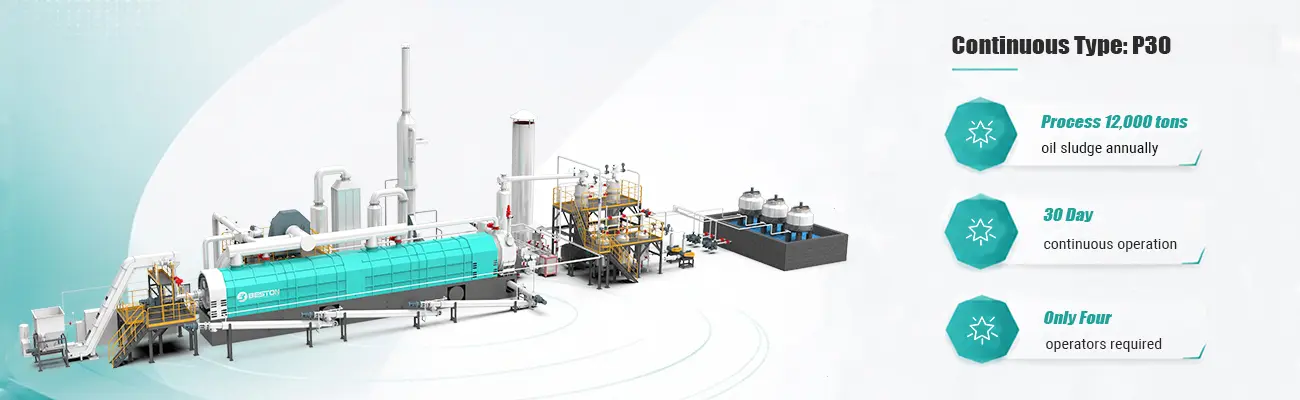
Hydrocarbon Recovery Creates a Secondary Value Stream
Thermal treatment does not necessarily mean that hydrocarbons become waste. Depending on the feedstock and process configuration, volatilized hydrocarbons can be condensed and collected as an oil-rich liquid.
This creates a material-recovery pathway alongside waste treatment:
Oil sludge → Pre-treatment → Thermal desorption → Vapor condensation → Oil recovery + Treated solids
The recovered liquid requires characterization before determining its appropriate downstream use. Its properties depend on the original sludge composition and operating conditions.
Meanwhile, treated solids may have substantially reduced hydrocarbon contamination, although their final handling or reuse must be determined according to applicable environmental requirements and analytical results.
Safety and Environmental Controls Are Essential
Industrial sludge can contain flammable hydrocarbons and potentially hazardous compounds, so thermal desorption requires comprehensive process controls. Temperature, pressure, vapor flow, and combustion conditions should be monitored continuously.
Gas-tight equipment, appropriate pressure-control measures, leak detection, ventilation, and emergency shutdown systems help manage operational risks. Condensation and gas-treatment systems should also be designed according to the expected vapor composition.
Environmental performance depends on the complete process chain rather than the reactor alone. Exhaust treatment, non-condensable gas management, condensate handling, and treated-solid verification all contribute to the overall environmental profile.
Where Thermal Desorption Fits Industrial Waste Management
For petroleum-contaminated sludge and other hydrocarbon-bearing industrial residues, thermal desorption offers a practical combination of contaminant removal and resource recovery. Its effectiveness depends on matching the process configuration to the waste characteristics rather than applying a fixed treatment recipe.
With appropriate pre-treatment, controlled indirect heating, vapor condensation, gas management, and treated-material verification, thermal desorption equipment can convert a difficult industrial waste stream into recoverable hydrocarbons and a substantially cleaner solid fraction.


No comments:
Post a Comment