Pyrolysis is increasingly recognized as a resource recovery technology capable of converting waste materials into commercially useful outputs. Through thermal decomposition under oxygen-limited conditions, organic feedstocks can be transformed into liquid oil, combustible gas, and solid carbonaceous residues. Rather than focusing exclusively on waste volume reduction, industrial applications increasingly emphasize the subsequent utilization of these byproducts. Their commercial value depends on feedstock composition, operating parameters, product quality, and downstream processing requirements. Understanding these applications is essential for improving resource efficiency and establishing viable waste-to-resource systems.
1. Pyrolysis Oil: An Alternative Industrial Energy Resource
Pyrolysis oil is one of the principal liquid products generated during thermal decomposition. Its composition varies according to the feedstock and processing conditions, creating different opportunities for industrial utilization.
In waste tire pyrolysis, the resulting oil contains hydrocarbon compounds that can serve as an industrial fuel after appropriate quality assessment and, where necessary, upgrading. It may be used in certain industrial heating applications, including boilers and furnaces, subject to equipment compatibility and applicable fuel specifications.
Plastic pyrolysis oil presents another resource recovery opportunity. Depending on the polymer composition and processing configuration, it can contain hydrocarbon fractions with potential applications as industrial fuel or petrochemical feedstock. Further refining and purification may be required before it meets the specifications of downstream users.
For biomass pyrolysis, the liquid fraction is commonly referred to as bio-oil. Its relatively high oxygen content, acidity, and chemical instability can restrict direct utilization. Upgrading processes such as catalytic treatment and deoxygenation may improve its suitability for selected chemical and energy applications.
2. Pyrolysis Gas: Recovering Energy from Non-Condensable Compounds
Pyrolysis gas is another important output, typically containing hydrogen, carbon monoxide, methane, carbon dioxide, and light hydrocarbons. The proportion of combustible components determines its energy potential.
One practical application is internal energy recovery. After appropriate gas conditioning, combustible gas can be directed to a dedicated combustion system to provide heat for the pyrolysis reactor. This arrangement can reduce dependence on external fuels and improve overall thermal efficiency.
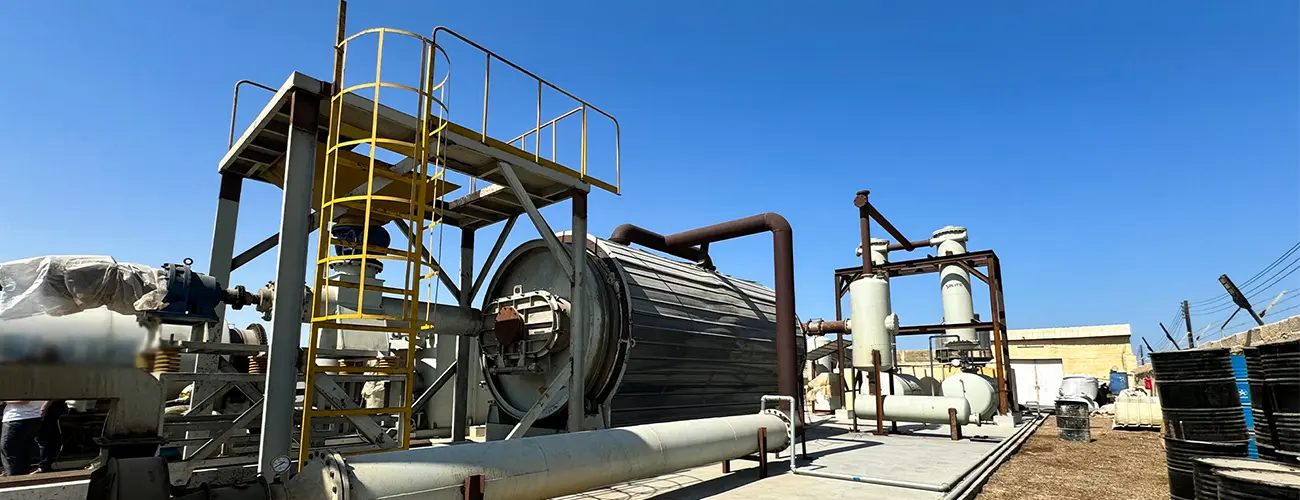
A small pyrolysis plant can incorporate gas recovery and utilization systems to support its own heating requirements, depending on processing capacity, feedstock characteristics, and gas generation rates. This is particularly relevant to facilities seeking to reduce recurring energy expenditure.
However, gas utilization requires reliable collection, pressure regulation, combustion control, and emission management. Non-condensable gas should not be regarded as a universally interchangeable fuel because its calorific value and combustion characteristics vary considerably.
3. Solid Residues: Carbon-Based Materials and Mineral Recovery
The solid fraction remaining after pyrolysis can also possess considerable resource value. Its composition is strongly influenced by the original feedstock.
Recovered carbon black (rCB): Tire pyrolysis produces a carbon-rich solid residue that can be processed through milling, classification, and further treatment. Depending on its quality and technical specifications, recovered carbon black may be used in rubber compounds, plastic products, coatings, and other industrial applications. Its performance should be evaluated against the requirements of the intended application.
Biochar: Biomass pyrolysis generates a carbon-rich material with a porous structure and relatively stable carbon fraction. Depending on its properties, biochar can be applied as a soil amendment, used in certain filtration applications, or incorporated into carbon removal projects. Feedstock contaminants and product certification requirements must be considered before commercial deployment.
Mineral-rich residues: Certain feedstocks produce solid fractions containing inorganic compounds and mineral constituents. These materials may have potential for further recovery or specialized applications, although their suitability depends on chemical composition and contaminant levels.
4. Factors Affecting the Commercial Utilization of Pyrolysis Byproducts
Producing potentially valuable byproducts does not automatically guarantee commercial viability. Several technical and economic factors determine whether these outputs can enter established industrial supply chains.
Feedstock composition: Different waste materials produce distinct chemical profiles and product distributions.
Process parameters: Temperature, residence time, and heating conditions influence product yield and quality.
Post-treatment requirements: Separation, purification, upgrading, and particle classification may be necessary to achieve market specifications.
Market compatibility: Industrial buyers generally require consistent product characteristics, reliable supply, and documented quality.
Environmental compliance: Emission control and residue testing are essential for responsible resource recovery.
A comprehensive feasibility assessment should therefore evaluate both the production process and the downstream utilization pathway.
5. Integrating Byproduct Utilization into a Circular Industrial System
The greatest resource recovery potential emerges when pyrolysis byproducts are considered as interconnected material and energy streams. Liquid products can enter suitable fuel or chemical markets, combustible gas can support internal heat demand, and solid residues can be evaluated for material recovery.
This integrated approach reduces reliance on a single revenue stream and may improve the overall economics of waste treatment. Nevertheless, each output requires independent quality verification and a realistic utilization strategy.
Conclusion
Pyrolysis byproducts provide multiple pathways for converting waste into industrial resources. Oil, non-condensable gas, and carbonaceous residues each have distinct applications determined by their chemical properties and processing requirements. Effective utilization depends on appropriate downstream treatment, stable product quality, and market compatibility. By integrating resource recovery with energy management and material utilization, pyrolysis can contribute to more efficient industrial waste management and circular resource systems.


No comments:
Post a Comment