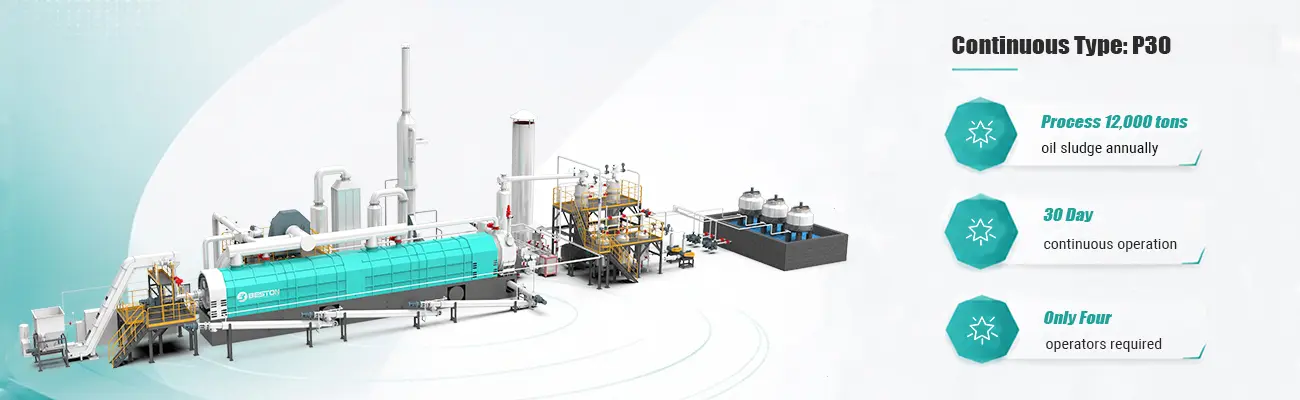
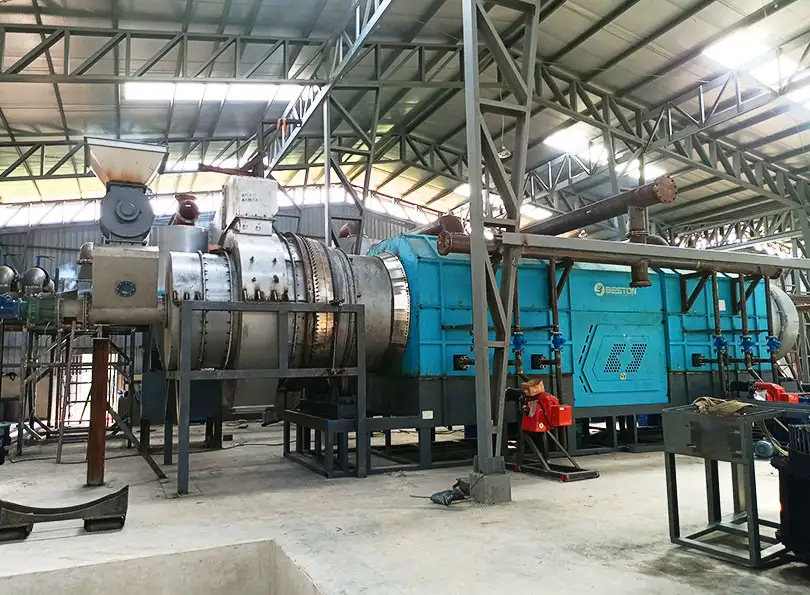
1. Sludge Characteristics Set the Cost Baseline
Municipal sewage sludge usually contains a high proportion of water. This makes dewatering and drying major cost drivers.
Before pyrolysis equipment selection, the project should establish sludge moisture content, organic matter, ash content, calorific value, contaminant profile, and seasonal variation. These parameters determine how much thermal energy is required before pyrolysis can proceed effectively.
A project using sludge with relatively high moisture may require mechanical dewatering followed by thermal drying. The dryer can become a substantial part of the process infrastructure because evaporating water consumes considerable energy.
Sludge composition also affects the quantity and characteristics of the final solid residue. Higher ash content generally means a lower proportion of carbon-rich material and greater demand for residue management.

2. Pretreatment and Drying Require Significant Investment
The front end of a sewage sludge treatment plant commonly includes receiving, storage, screening, dewatering, conveying, and drying equipment.
Mechanical dewatering reduces the initial water load at comparatively low energy consumption. Thermal drying then reduces residual moisture to a level suitable for stable pyrolysis.
The drying system should be sized according to actual sludge throughput and moisture reduction rather than nominal plant capacity alone. Heat integration can materially affect operating economics. For example, recoverable process gas or excess thermal energy may be directed toward drying instead of being wasted.
A poorly integrated drying system can increase both equipment size and fuel consumption.
3. The Pyrolysis System Determines Core Equipment Cost
The pyrolysis section normally represents one of the central capital expenditures. Its configuration depends on throughput, sludge properties, target operating temperature, residence time, and desired product characteristics.
The reactor must provide controlled heating under oxygen-limited conditions. Feeding equipment must also accommodate the physical characteristics of dried sludge, which can vary considerably in bulk density and flowability.
Auxiliary systems include thermal oil or combustion equipment, gas circulation, discharge equipment, temperature measurement, pressure control, and process instrumentation.
For a large municipal project, equipment cost should therefore be evaluated as an integrated thermal-processing system rather than as the purchase price of the reactor alone.
4. Emission Control Can Shift the Budget
Municipal sewage sludge may contain nitrogen, sulfur, heavy metals, organic contaminants, and other constituents that require careful management during thermal treatment.
The emission-control system may include dust removal, gas cooling, condensation, desulfurization, denitrification, adsorption, or other treatment stages depending on the feedstock and local emission limits.
The appropriate configuration should be determined through feedstock characterization and process testing. Over-specifying the system can increase capital expenditure unnecessarily. Under-specification can create permitting and operational problems.
Emission control should therefore be included in the preliminary engineering budget from the beginning.
5. Site Infrastructure Adds Hidden Capital Costs
The process equipment is only one component of project construction cost. Civil works, foundations, electrical systems, water supply, drainage, roads, storage areas, fire protection, control rooms, and utility connections can represent a significant portion of total investment.
Existing wastewater treatment facilities may offer advantages because some infrastructure is already available. Existing sludge handling, power supply, access roads, and utility networks can reduce the amount of new construction required.
However, integration with an operating municipal facility can also create additional engineering constraints. Construction sequencing must avoid disrupting existing treatment operations.
6. Product and Residue Handling Must Be Included
Sludge pyrolysis does not eliminate the need for downstream material management. The resulting solid product must be collected, cooled, stored, tested, and transported.
Depending on its composition and regulatory classification, the solid may have potential applications or may require controlled disposal. Heavy metal concentration is particularly important when evaluatin