The accumulation of waste plastics has evolved into a persistent environmental and industrial challenge. Polyethylene, polypropylene, and polystyrene fractions persist in landfills for decades, resisting natural degradation. Pyrolysis plant systems offer a thermochemical conversion route that transforms these polymeric wastes into valuable energy carriers. The process bridges waste management with renewable energy production through controlled molecular disintegration.
Thermochemical Breakdown of Polymeric Feedstock
A waste plastic to fuel machine for sale operates under oxygen-limited conditions, where waste plastics are subjected to elevated temperatures, typically between 350°C and 500°C. In this environment, long-chain polymer structures undergo depolymerization and random scission reactions. The molecular chains fracture into shorter hydrocarbon segments, forming liquid oil, non-condensable gas, and solid carbonaceous residue.
The reaction environment is carefully regulated to avoid combustion. Heat is transferred indirectly through reactor walls, ensuring that the plastics undergo thermal cracking rather than oxidation. This distinction is critical, as it preserves hydrocarbon value while preventing uncontrolled emissions.
The feedstock composition directly influences output characteristics. Polyolefin-rich plastics generally yield higher proportions of liquid hydrocarbons, while mixed or contaminated plastics may increase gas and char fractions. Process adaptability is therefore a key feature of advanced pyrolysis plant configurations.

System Architecture and Operational Flow
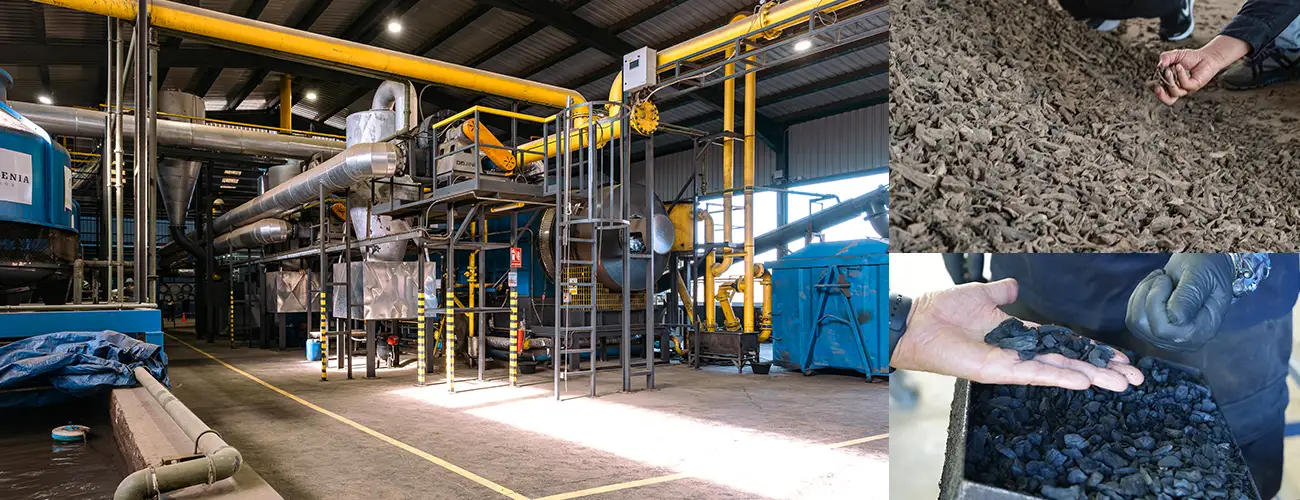
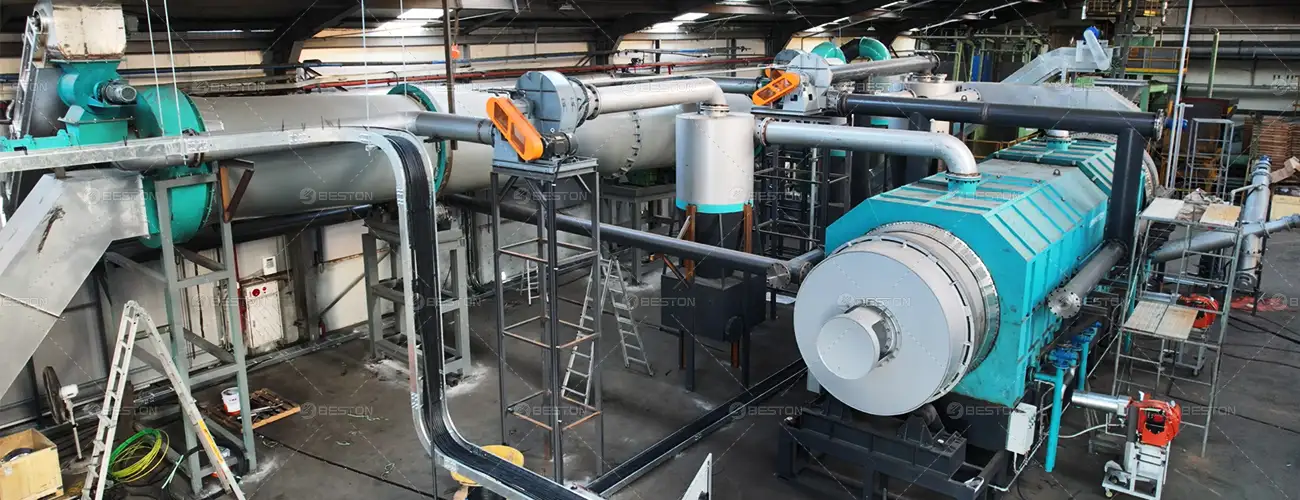
A modern pyrolysis plant system integrates several functional modules designed to maintain continuous and stable conversion. These include an automated feeding system, rotary or fixed-bed reactor, condensation unit, gas recovery loop, and emission control assembly.
The reactor serves as the core conversion chamber. Inside, shredded or pelletized plastic feedstock is continuously agitated to ensure uniform heat distribution. This prevents localized overheating and enhances reaction consistency. The thermal environment is maintained through external heating sources, often supplemented by recovered process gas.
Vapors generated during cracking are directed into a multi-stage condensation system. Here, temperature gradients enable selective liquefaction of hydrocarbons. Heavier fractions condense into fuel-grade oil, while lighter gases remain in a non-condensable state. These gases are frequently recirculated to support reactor heating, reducing external energy demand.
Solid residues, primarily composed of carbon black-like material, can be utilized in construction composites or industrial fillers depending on purity levels.
Renewable Energy Generation from Pyrolytic Output
The primary output of a pyrolysis plant is liquid fuel derived from plastic waste. This pyrolytic oil exhibits a hydrocarbon profile comparable to industrial diesel fractions after minimal refining. It can be used in boilers, furnaces, and power generation systems, contributing to decentralized energy supply chains.
Non-condensable gases such as methane, hydrogen, and light hydrocarbons are also generated during the process. These gases possess significant calorific value and are often reused within the system itself. This internal energy recycling improves overall process efficiency and reduces reliance on external fuel inputs.
In integrated energy systems, pyrolysis-derived fuels serve as transitional renewable energy carriers. They provide an alternative to fossil-based fuels while simultaneously addressing plastic pollution.
Waste Plastic to Fuel Machine for Sale and Industrial Deployment
Industrial demand for scalable plastic conversion technologies has led to the development of modular and continuous pyrolysis systems. A waste plastic to fuel machine for sale typically includes pre-treatment units, thermal reactors, condensation assemblies, and automated control systems designed for industrial throughput.
These systems are engineered for feedstock flexibility, allowing processing of mixed plastic streams with varying contamination levels. Advanced configurations incorporate temperature zoning, catalytic enhancement zones, and automated residue discharge mechanisms to maintain operational continuity.
Energy efficiency is enhanced through heat recovery loops, where exhaust gases are reused as secondary heating sources. This reduces operational costs and improves overall energy balance.
Process Optimization and Environmental Performance
Efficiency in pyrolysis plant systems is governed by residence time, temperature stability, and condensation accuracy. Short residence times reduce secondary cracking, preserving liquid yield quality. Precise thermal control minimizes unwanted by-products and ensures consistent fuel output.
From an environmental standpoint, the conversion of waste plastics into fuel significantly reduces landfill burden and mitigates marine and terrestrial pollution pathways. Properly engineered emission control systems capture particulate matter and volatile compounds, ensuring compliance with industrial environmental standards.
The solid carbon by-product can also contribute to circular material flows when appropriately processed, further enhancing system sustainability.
Conclusion
Pyrolysis plant technology provides a structured and scalable pathway for converting waste plastics into renewable energy resources. Through controlled thermal decomposition, complex polymers are transformed into usable fuel streams and recyclable by-products. With increasing availability of waste plastic to fuel machine for sale, the technology continues to expand its role in industrial waste valorization and decentralized energy production systems.