Modern agriculture faces a complex challenge: increasing food production while maintaining soil health, reducing environmental pressure, and improving resource efficiency. Conventional farming systems often experience declining soil organic matter, nutrient imbalance, and increased dependence on chemical inputs. Sustainable agriculture development requires innovative approaches that restore ecological functions while supporting long-term productivity.
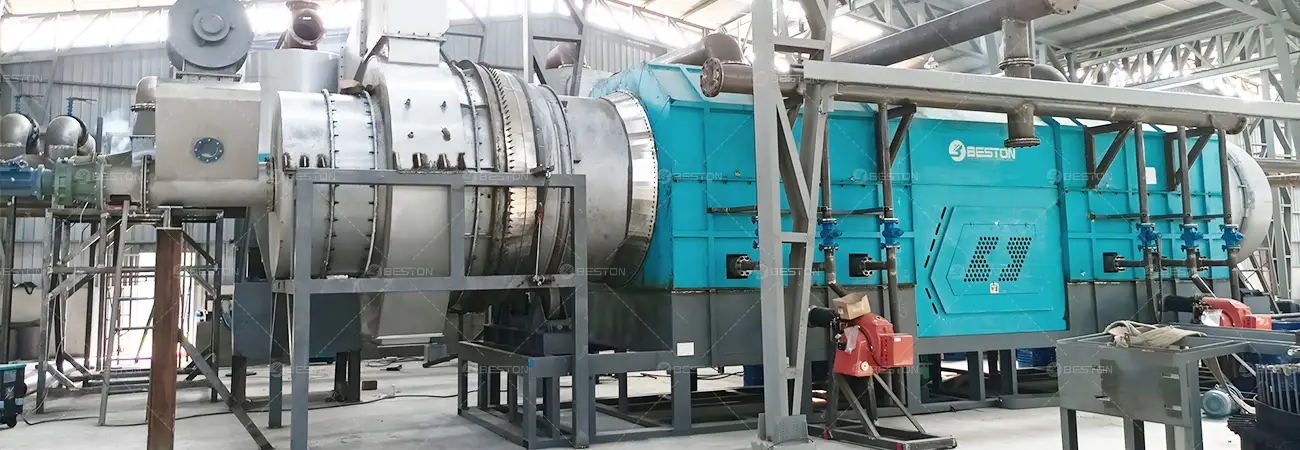
A biochar pyrolysis machine provides a practical solution by transforming agricultural biomass into stable biochar through controlled thermal decomposition. This technology converts crop residues, forestry waste, and other organic materials into a carbon-rich soil amendment. The process creates a circular pathway where agricultural waste becomes a valuable resource for improving soil performance and reducing environmental impacts.
Enhancing Soil Fertility and Structure
Healthy soil is the foundation of sustainable agricultural production. However, intensive cultivation can gradually reduce soil carbon content and weaken its physical structure. Biochar application helps reverse these trends by introducing stable carbon compounds into degraded soils.
The porous architecture of biochar creates microhabitats for beneficial microorganisms. These microscopic ecosystems improve nutrient cycling and support biological activity within the soil matrix. In addition, the high surface area of biochar allows it to retain nutrients such as nitrogen, phosphorus, and potassium, reducing nutrient leaching and improving fertilizer efficiency.
A biochar pyrolysis machine enables consistent production of high-quality biochar with controlled characteristics. Temperature regulation, oxygen limitation, and processing duration influence the final carbon structure, making it possible to produce biochar suitable for different agricultural applications.
Improving Water Management Efficiency
Water scarcity has become a significant concern in many agricultural regions. Soil with poor organic content often struggles to retain moisture, resulting in increased irrigation requirements and reduced crop resilience during dry periods.
Biochar improves water retention by creating a network of interconnected pores that capture and gradually release moisture. This hygroscopic behavior helps maintain a more stable soil environment, particularly in sandy or degraded soils with limited water-holding capacity.
By producing biochar from locally available biomass, a biochar pyrolysis machine supports decentralized agricultural improvement strategies. Farmers can process crop residues near production areas, reducing transportation requirements while generating a material that enhances water-use efficiency.
Promoting Agricultural Waste Recycling
Agricultural operations generate significant amounts of biomass residue, including rice husks, straw, corn stalks, and pruning materials. Improper disposal methods can contribute to air pollution and greenhouse gas emissions. Sustainable agriculture requires effective methods for managing these organic resources.
Pyrolysis technology provides a closed-loop approach to biomass utilization. Instead of treating residues as waste, a biochar pyrolysis machine converts them into valuable carbon materials. During the process, volatile compounds can be recovered as energy sources, while the remaining biochar becomes an agricultural amendment.
This transformation supports the principles of regenerative agriculture by maintaining carbon within productive systems. It also reduces dependence on external soil enhancement materials and encourages more self-sufficient farming practices.
Supporting Carbon Sequestration and Climate Goals
Agriculture plays an important role in global carbon management. While traditional farming activities can release greenhouse gases, biochar integration creates opportunities for long-term carbon storage.
The carbon contained in biochar has a stable molecular configuration that resists rapid decomposition. When incorporated into agricultural land, it can remain in the soil for extended periods, effectively transferring atmospheric carbon into a more durable terrestrial reservoir.
A biochar pyrolysis machine strengthens this carbon sequestration pathway by providing reliable and scalable biochar production. With improved process automation and emission control systems, modern equipment can support measurable carbon reduction initiatives and contribute to broader climate strategies.
Economic and Operational Benefits for Farmers
Sustainable agriculture must also be economically viable. Biochar production creates additional value from agricultural byproducts that would otherwise have limited financial returns.
Farmers and agricultural enterprises can utilize locally available biomass resources to produce biochar for their own fields or commercial markets. This creates new opportunities in soil improvement, carbon credit participation, and renewable resource management.
Furthermore, advanced pyrolysis systems improve operational efficiency through optimized heat recovery and reduced energy consumption. These improvements make biochar production more practical for agricultural applications of different scales.
Conclusion: Building a Resilient Agricultural Future
Sustainable agriculture development depends on technologies that enhance productivity while protecting natural resources. A biochar pyrolysis machine provides an integrated solution by converting agricultural residues into stable carbon materials that improve soil quality, conserve water, recycle biomass, and support carbon sequestration.
As agricultural systems continue to evolve, biochar technology will become an increasingly important component of regenerative farming strategies. By connecting waste management, soil restoration, and climate action, biochar production represents a significant step toward a more resilient and sustainable agricultural future.


No comments:
Post a Comment